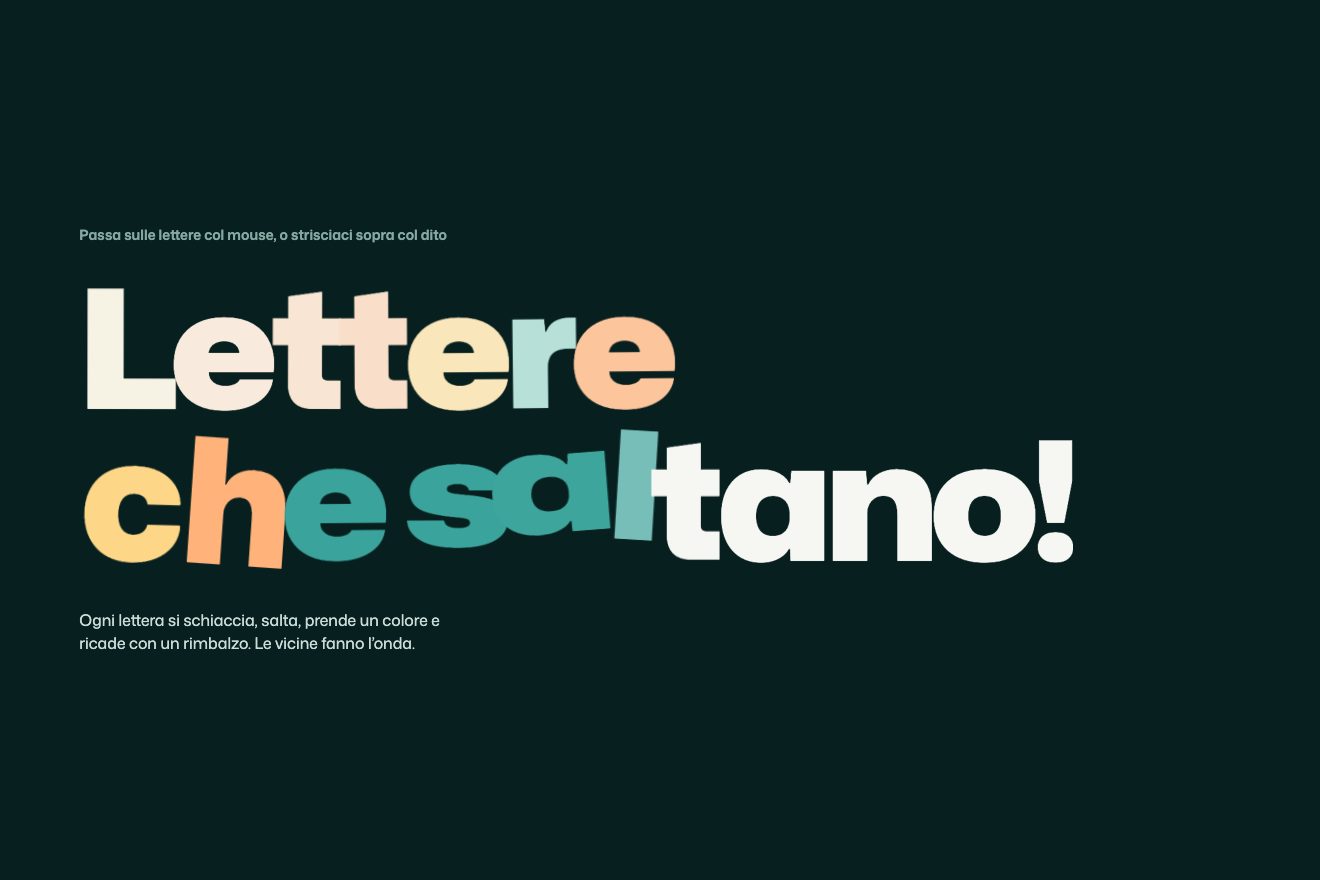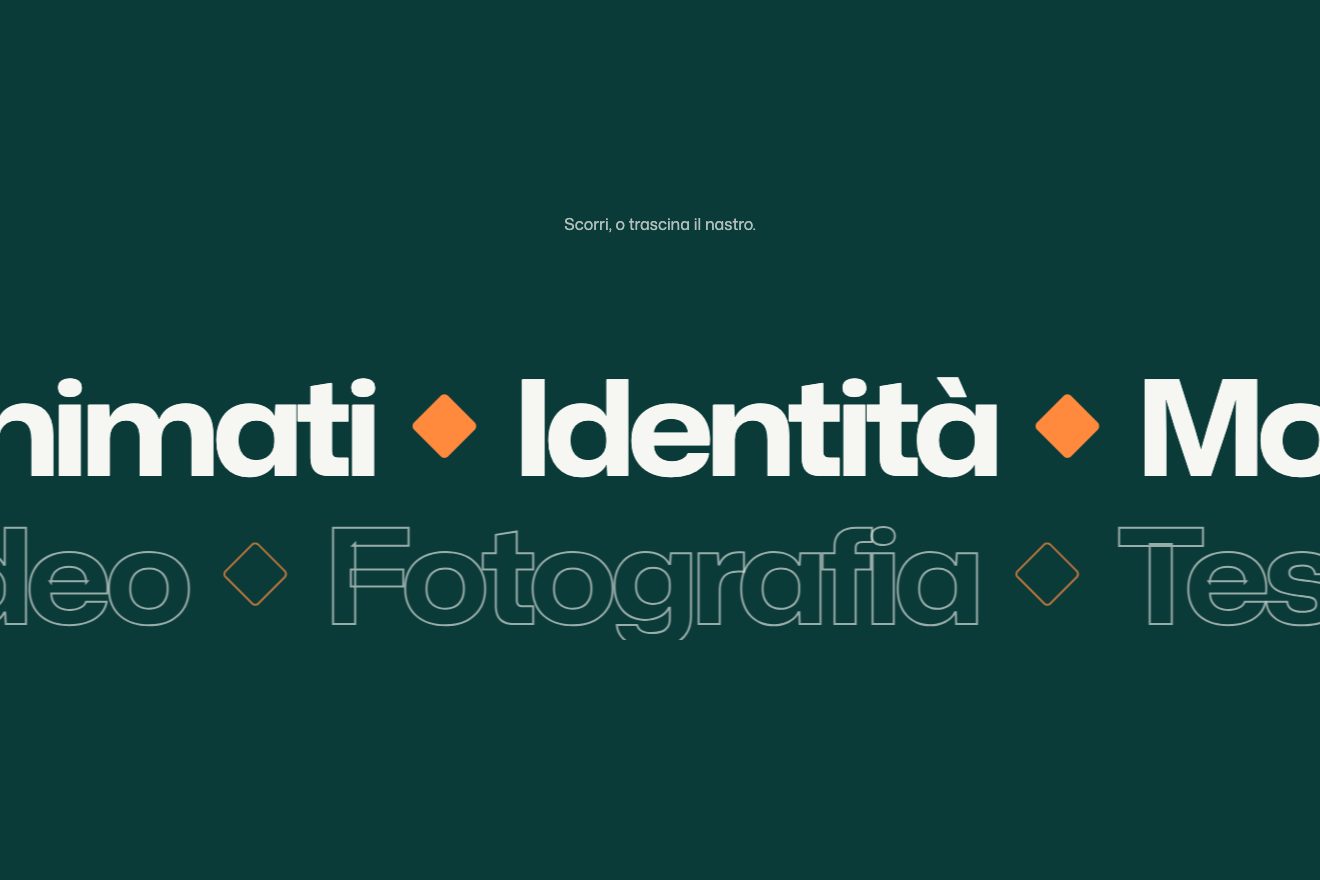
Marquee that speeds up with scroll
Scroll, Text, Hover
Free
A studio's archive, one project a year, on a thin ruler: under the pointer the ticks rise in a wave, each on a spring of its own, the orange needle snaps to the nearest year with the project's name hanging from it, and the big year rolls like an odometer, thin while it runs and heavy when it lands. Minimal style.
A folder that runs on its own: index.html, style.css, script.js and the libraries from a CDN. The React and Vue tabs hold the same demo as a ready component, which switches its animations off when it leaves the page.
<!doctype html>
<html lang="en">
<head>
  <meta charset="utf-8">
  <meta name="viewport" content="width=device-width, initial-scale=1">
  <title>The ruler archive</title>
  <link rel="stylesheet" href="https://cdn.jsdelivr.net/npm/@fontsource-variable/inter-tight@5.3.0/index.css">
  <link rel="stylesheet" href="style.css">
</head>
<body>
  <main class="stage" data-stage>
    <header class="top">
      <span class="top__name">Studio Kesten</span>
      <span class="top__note">Archive, one project a year</span>
    </header>

    <!-- the year: four columns of digits that roll like an odometer, thin while they fly and heavy when they land -->
    <p class="year" aria-hidden="true" data-year></p>

    <!-- the ruler: one tall tick a year and thin ones between; under the pointer the ticks rise in a wave, each on its
         own spring, and the needle snaps from year to year carrying the name of the project -->
    <div class="ruler" role="slider" tabindex="0" aria-label="Archive year" data-ruler>
      <div class="ruler__ticks" data-ticks></div>
      <div class="needle" data-needle>
        <span class="needle__line" data-needle-line></span>
        <span class="caption" data-caption><span class="caption__mask" data-caption-mask></span></span>
      </div>
      <div class="ruler__labels" aria-hidden="true" data-labels></div>
    </div>

    <p class="hint">Move along the ruler</p>
  </main>

  <script src="https://cdn.jsdelivr.net/npm/gsap@3.15.0/dist/gsap.min.js"></script>
  <script src="script.js"></script>
</body>
</html>Change values, colours and text with the controls and watch the animation respond live. Or write in the code yourself. Then download the folder with your changes.
18 values to change
With the Animorio connector, Claude Code takes it from here, guide included, and fits it into your project. Paste this request:
Take “The ruler archive” from Animorio and fit it into my siteThe ruler is a row of i elements one pixel wide and a hundred tall, placed with left in percent: a tick for each year and STEPS spaces between two years. Each one has its resting height (taller every five and every ten years) and every frame it only gets transform: scaleY from its foot, so the lines stay crisp and nothing works the layout out again. It goes from grey to black with its opacity, by how far it has risen.
Each tick wants to rise by LIFT times a Gaussian bell, exp(−d²/2R²), with d the horizontal distance from the pointer and R equal to REACH (narrower on a short ruler). It does not take it at once: it chases it on a spring (TICK_SPRING) integrated by hand on GSAP's ticker with the step capped at 1/30 of a second. Behind a fast pointer the ticks sink a little under their size, never below a third.
The year wanted is the one nearest to the pointer; the needle gets there on a spring of its own (NEEDLE_SPRING) and the same position, a number with decimals, moves the digits. Each column is a strip with the digits 0 to 9 and one more 0; the ones column stands at y mod 10, the others turn only while the column on their right goes from 9 to 10, like the wheels of a counter. The year's weight goes from WEIGHT[0] to WEIGHT[1] with the spring's speed.
At each new year the project's name comes into the mask from below when going on and from above when going back, and the old one leaves the other way on the same curve, so they never overlap; the kind of work follows a beat later. The change happens at most every tenth of a second. Over the last stretch of the ruler the caption slides to the left of the needle, and it never leaves the page.
The mouse drives the wave over the whole page, a finger only while it touches (the page has touch-action: pan-y, so it can still scroll up and down). The ruler is a role=slider with aria-valuetext: the arrows, Page Up and Down, Home and End bring the needle with a ghost pointer that glides. When the page opens a timeline grows the ticks and runs the needle; if nobody points, after 2.4 seconds the needle wanders on a slow sine.
| Name | File | Default | What it changes |
|---|---|---|---|
REACH | script.js | 70 | How wide the wave of ticks is round the pointer, in pixels. |
LIFT | script.js | 64 | How many pixels the tick right under the pointer rises. |
TICK_SPRING | script.js | [300, 17] | Each tick's spring: how stiff, and how much it is held back (less holds, more ripple). |
NEEDLE_SPRING | script.js | [150, 16] | The spring of the needle and of the rolling year: how stiff, and how much it is held back. |
WEIGHT | script.js | [720, 180] | The weight of the year at rest, and while it rolls fast (100 to 900). |
STEPS | script.js | 5 | The spaces between two years on the ruler (on a phone half as many). |
WANDER | script.js | true | The needle wanders by itself when nobody points. |
For the archive or timeline of a studio, a photographer, a family business, a festival with many editions: one thing a year, to browse by passing over it. It works while the years are thirty or fifty or so; with many more the ticks get too dense and the wave takes in too many years at once.
The same animations with the sizes adapted: the ruler is as wide as the screen with half the ticks between two years, the wave is narrower, the year is a third of the width. The wave and the needle follow the finger while it touches and settle when it lifts; the page still scrolls up and down. The caption never leaves the screen.
No wave, no springs and no rolling digits: the needle goes straight to the year, the new year appears with a short fade and the project's name swaps with a fade, without sliding. When the page opens everything fades in already in place, on 2026.
GSAP 3.15.0, Inter Tight (font variabile) 5.3.0.
Compressed with gzip, the three demo files weigh 8.6 KB; the libraries: GSAP 28 KB.
Tested on 14 October 2026
Use it in your own projects and in your clients’ projects. Do not resell it or redistribute it as is. GSAP stays under its own Standard license. Full license.
With your account’s email and password.
or with your email
You’re signed in as .
With your account, you can download the zip of every animation and every pack, for free.