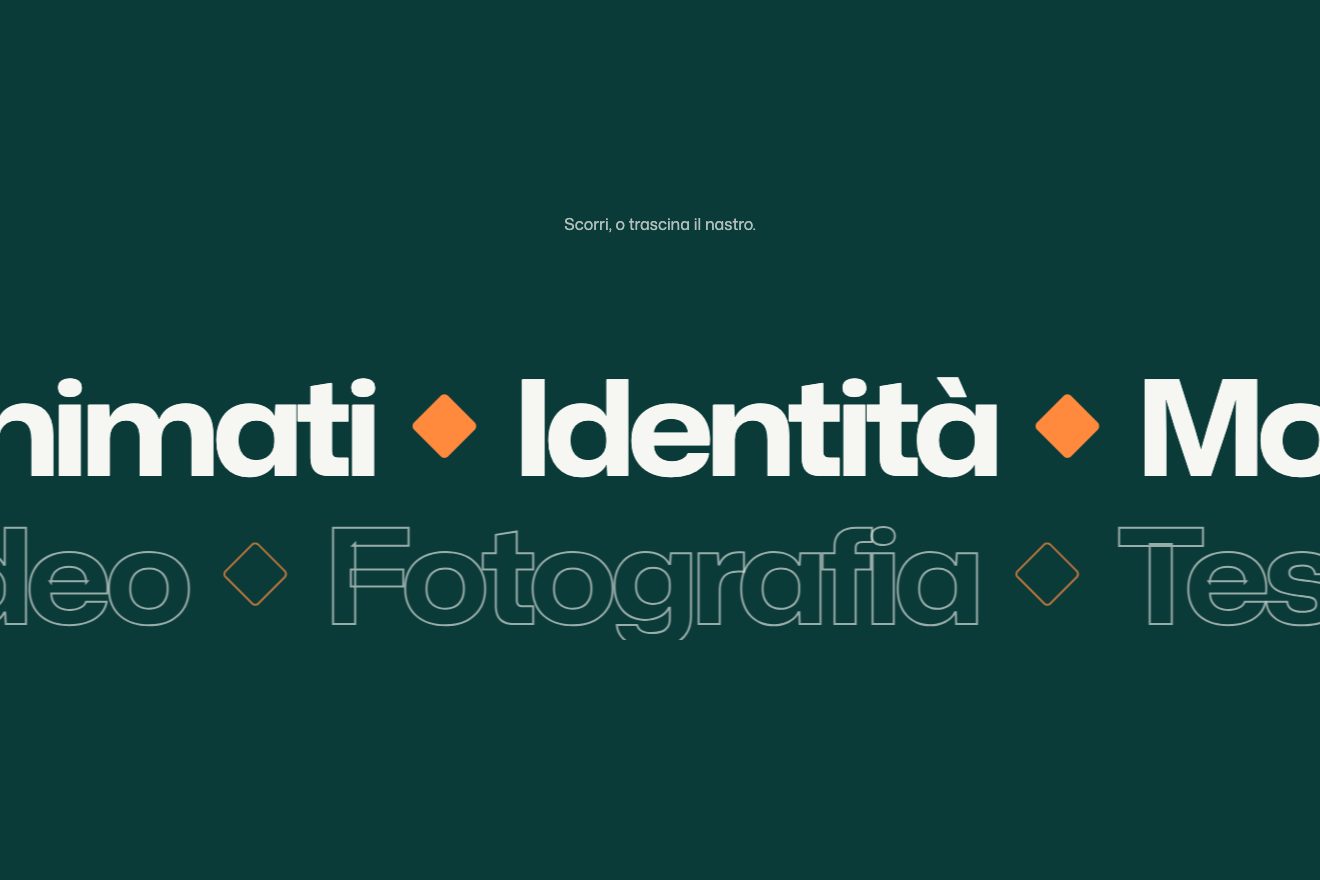
Speeding marquee
Scroll, Text, Hover
Three liquid glass app icons in a row on a light grey background, with a violet light behind them and a fine grid: the rim of the glass bends the lines behind it, a lens follows the pointer and magnifies the symbol, the rim light turns with the tilt and, pressed, the icon squashes like jelly, ripples and springs back while its name gives way to Opening.
A folder that runs on its own: index.html, style.css, script.js and the libraries from a CDN. The React and Vue tabs hold the same demo as a ready component, which switches its animations off when it leaves the page.
<!doctype html>
<!--
  "Liquid glass icons" from Animorio · https://animorio.com
  License: free on your own sites and your clients’ sites, paid work included.
  Not for resale, redistribution, templates or code collections · https://animorio.com/en/license/
-->
<html lang="en">
<head>
  <meta charset="utf-8">
  <meta name="viewport" content="width=device-width, initial-scale=1">
  <title>The liquid glass icon under the pointer</title>
  <link rel="stylesheet" href="https://cdn.jsdelivr.net/npm/@fontsource-variable/mona-sans@5.3.0/wdth.css">
  <link rel="stylesheet" href="style.css">
</head>
<body>
  <main class="stage" data-stage>
    <!-- the page behind the glass: a soft light and a fine grid, painted on a canvas so the icons can bend it -->
    <canvas class="stage__bg" data-bg aria-hidden="true"></canvas>

    <!-- three app icons of liquid glass: the glass bends what is under it, a lens follows the pointer,
         the rim light turns with the tilt and a press squashes the icon like gel -->
    <ul class="row" data-row aria-label="Apps">
      <li class="app" data-app data-glyph="spark">
        <span class="app__shadow" data-shadow aria-hidden="true"></span>
        <button class="app__icon" type="button" data-icon><canvas class="app__glass" data-glass aria-hidden="true"></canvas></button>
        <span class="app__name"><span class="app__line" data-name></span><span class="app__line app__line--open">Opening</span></span>
      </li>
      <li class="app" data-app data-glyph="bars">
        <span class="app__shadow" data-shadow aria-hidden="true"></span>
        <button class="app__icon" type="button" data-icon><canvas class="app__glass" data-glass aria-hidden="true"></canvas></button>
        <span class="app__name"><span class="app__line" data-name></span><span class="app__line app__line--open">Opening</span></span>
      </li>
      <li class="app" data-app data-glyph="rings">
        <span class="app__shadow" data-shadow aria-hidden="true"></span>
        <button class="app__icon" type="button" data-icon><canvas class="app__glass" data-glass aria-hidden="true"></canvas></button>
        <span class="app__name"><span class="app__line" data-name></span><span class="app__line app__line--open">Opening</span></span>
      </li>
    </ul>

    <svg class="ghost" data-ghost viewBox="0 0 24 24" aria-hidden="true"><path d="M5 3.2 19.2 11l-6.3 1.6-3.3 5.9Z"></path></svg>
  </main>

  <script src="https://cdn.jsdelivr.net/npm/gsap@3.15.0/dist/gsap.min.js"></script>
  <script src="script.js"></script>
</body>
</html>Change values, colours and text with the controls and watch the animation respond live. Or write in the code yourself. Then download the folder with your changes.
15 values to change
With the Animorio connector, Claude Code, ChatGPT, Cursor or VS Code take it from here, guide included, and fit it into your project. Paste this request:
Take “Liquid glass icons” from Animorio and fit it into my siteThe page background, the light and the grid, is painted on a canvas. Each icon copies the piece behind it, with a margin all round, and adds its symbol: from this still image the glass picks, pixel by pixel, the colour to show, shifted a little. That shift is what makes the glass.
The shape is a superellipse with exponent 5, the squircle of app icons. For each pixel the distance from the edge and the direction the edge faces are worked out once: in the last fifth the pixel picks further and further out, so the background lines beyond the rim come into the glass curved. Red, green and blue pick at slightly different distances: the thread of colours.
Under the pointer the shift goes towards the pointer itself, along a Gaussian bell: a magnifying lens. On press a ring spreads and dies out in a second and a half, while a slight sinusoidal wobble makes the glass look liquid. The canvas is redrawn only while the icon is alive.
Over the shifted pixels there are a white haze from the top, a soft sheen and the rim: a very thin dark line and, over it, a specular light on a linear gradient whose angle follows the icon’s tilt, read with gsap.getProperty. The pointer carries a white glow with it.
GSAP tilts the icon towards the pointer, squashes it wide and low on press with its origin at the bottom and lets it go with elastic.out, while the shadow tightens and widens. The name and Opening sit in one window and slide together. A drawn pointer follows a timeline that visits, strokes and presses each icon; a real touch stops it, and after six quiet seconds it starts again.
| Name | File | Default | What it changes |
|---|---|---|---|
APPS | script.js | Sorrin, Ondra, Pyxa | The names of the three apps, separated by commas. |
ACCENT | script.js | #5b63f5 | The colour of the symbols and of the light behind the glass. |
LENS | script.js | 1 | How much the lens following the pointer magnifies. |
EDGE | script.js | 1 | How much the rim of the glass bends what is behind it. |
RIPPLE | script.js | 1 | How much the glass ripples when you press it. |
TILT | script.js | 1 | How far the icon tilts towards the pointer. |
SQUASH | script.js | 1 | How much it squashes like jelly when pressed. |
PRISM | script.js | 1 | How far the colours split where the glass bends. |
For the home screen of a site presenting an app or a suite of apps, a studio’s «our apps» section, a dashboard’s quick links, or any icon that should feel like a real glass object under the finger.
The icons are sized on width and height together, so all three fit in a row in the box; each icon’s canvas is rebuilt at its real size and the background grid is redrawn. Touch does what the mouse does: it rests, lifts and tilts the icon, presses it, and lets it go after a moment.
The icons stay still, without floating, tilting or squashing, and there is no drawn pointer; the glass still bends the background, the lens does not move and on press the name gives way to Opening with a fade.
GSAP 3.15.0, Mona Sans (font variabile) 5.3.0.
Compressed with gzip, the three demo files weigh 8.3 KB; the libraries: GSAP 28 KB.
Tested on 25 October 2026
Use it in your own projects and in your clients’ projects. Do not resell it or redistribute it as is. GSAP stays under its own Standard license. Full license.
Support Animorio
Animorio stays free thanks to the people who support it. If you like, buy us a coffee: it helps us make the next animations.
You asked for
We made it for you: it’s in the library, with the preview, the Playground and the code to copy.
An animation you can’t find, or a site to take apart in the journal: tell us which. We pick the next ones from here.
With your account’s email and password.
or with your email
You’re signed in as .
With your account, you can download the zip of every animation and every pack, for free.