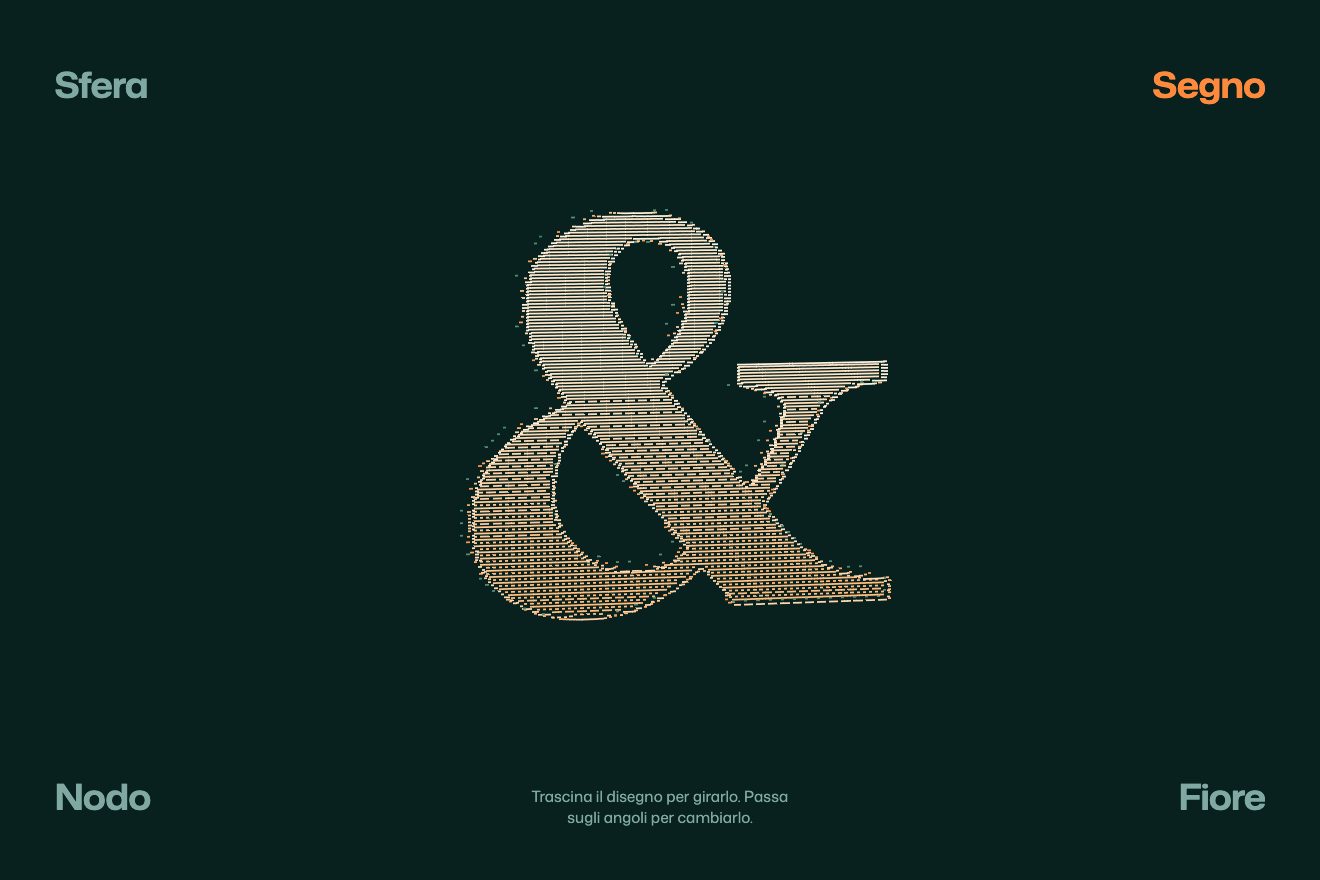
The dash relief
WebGL, 3D, Hover
A made-up bank’s titanium card in 3D: brushed metal with engraved lettering, a champagne chip and a bevelled edge that catches the light, reflecting a studio room. It leans toward the pointer, a drag spins it on by inertia until a spring settles it on its front or its back, and a click flips it over. Libraries.dev style: a real material on a real piece, on near black.
A folder that runs on its own: index.html, style.css, script.js and the libraries from a CDN. The React and Vue tabs hold the same demo as a ready component, which switches its animations off when it leaves the page.
<!doctype html>
<!--
  "Brushed metal card" from Animorio · https://animorio.com
  License: free on your own sites and your clients’ sites, paid work included.
  Not for resale, redistribution, templates or code collections · https://animorio.com/en/license/
-->
<html lang="en">
<head>
  <meta charset="utf-8">
  <meta name="viewport" content="width=device-width, initial-scale=1">
  <title>Arcline Titanium</title>
  <link rel="stylesheet" href="https://cdn.jsdelivr.net/npm/@fontsource-variable/mona-sans@5.3.0/index.css">
  <link rel="stylesheet" href="style.css">
  <script type="importmap">
    { "imports": {
      "three": "https://cdn.jsdelivr.net/npm/three@0.178.0/build/three.module.min.js",
      "three/addons/": "https://cdn.jsdelivr.net/npm/three@0.178.0/examples/jsm/"
    } }
  </script>
</head>
<body>
  <!-- a made-up bank, Arcline: its titanium card, brushed metal with engraved lettering, in 3D. Hover tilts it toward
       the pointer, drag spins it with inertia, a click flips it to the back -->
  <main class="palco" data-palco>
    <header class="testa" data-testa>
      <span class="etichetta">Arcline Titanium</span>
      <span class="sotto" data-stato>Founding member</span>
    </header>

    <div class="scena" data-scena>
      <canvas class="tela" data-tela role="img" aria-label="A brushed titanium payment card turning in 3D"></canvas>
      <!-- if WebGL is missing: a flat brushed card -->
      <div class="ripiego" data-ripiego aria-hidden="true"><span>ARCLINE</span></div>
    </div>

    <p class="aiuto" data-aiuto>
      <span class="aiuto-voce">Drag to spin</span>
      <span class="aiuto-voce">Click to flip</span>
    </p>

    <!-- the fake pointer of the autopilot -->
    <svg class="puntatore" data-puntatore viewBox="0 0 24 24" aria-hidden="true">
      <path d="M5 3l14 8-6.2 1.6L10 19z"/>
    </svg>
  </main>

  <script src="https://cdn.jsdelivr.net/npm/gsap@3.15.0/dist/gsap.min.js"></script>
  <script type="module" src="script.js"></script>
</body>
</html>Change values, colours and text with the controls and watch the animation respond live. Or write in the code yourself. Then download the folder with your changes.
21 values to change
With the Animorio connector, Claude Code, ChatGPT, Cursor or VS Code take it from here, guide included, and fit it into your project. Paste this request:
Take “Brushed metal card” from Animorio and fit it into my siteThe body is an ExtrudeGeometry of a rounded rectangle, 0.05 thick with a 0.012 bevel, in a dark glossy metal. On the front and the back sit two ShapeGeometry meshes of the same shape, with their UVs remapped from 0 to 1 across width and height, so the front and back textures land exactly.
Each face has two 2048 pixel canvases: colour and roughness. The ground is brushed with nine thousand thin horizontal strokes, light and dark, and the lettering is engraved by drawing it twice, a light copy offset by two pixels and a dark one on top; in the roughness map the engravings are rougher than the metal. The material is a MeshPhysicalMaterial with metalness 1, some anisotropy and RoomEnvironment’s room as the reflection.
Dragging adds degrees to the spin and keeps an average of the speed. On release that speed, capped at MAX_SPIN, spins the card by itself and decays with exp(-FRICTION·dt); below 140 degrees per second a spring (stiffness 70, damping 10.5) takes it to the nearest multiple of 180 in the direction of the spin. A click without movement moves the target by 180 degrees: the same spring flips it.
The pointer’s position in the scene gives the wanted tilt, up to TILT degrees, and a second spring chases it, so it overshoots a hair when it comes back flat. The shadow is a floor plane with a radial gradient, as wide as the card seen from above: cos(spin)·width plus the thickness.
| Name | File | Default | What it changes |
|---|---|---|---|
TILT | script.js | 14 | How many degrees the card leans toward the pointer. |
FRICTION | script.js | 1.6 | How fast a thrown spin slows down (higher = sooner). |
MAX_SPIN | script.js | 900 | The fastest spin a throw can give, in degrees per second. |
IDLE_SWAY | script.js | 1 | How much the card sways by itself at rest (0 = still). |
BRUSH | script.js | 1 | How strong the brushed lines of the metal are. |
SHINE | script.js | 1 | How bright the studio reflections are. |
AUTO_PILOT | script.js | 1 | 1 shows the gestures with a fake pointer when nobody touches the card, 0 turns it off. |
For the page of a payment card, a subscription or an exclusive membership card: in a fintech, a digital bank or a service’s members programme, where the card is the product and you want people to touch and turn it like a real object.
The same card, smaller: it spins as you drag with a finger and flips with a tap; the tilt follows the finger while it is on the card.
The card stays still, slightly tilted, without swaying or spinning on: dragging and clicking take it straight to its front or its back, without a spring.
Three.js 0.178.0, GSAP 3.15.0, Mona Sans (font variabile) 5.3.0.
Compressed with gzip, the three demo files weigh 8.7 KB; the libraries: GSAP 28 KB, Three.js + RoomEnvironment 176 KB.
Tested on 26 October 2026
Use it in your own projects and in your clients’ projects. Do not resell it or redistribute it as is. GSAP stays under its own Standard license. Full license.
Support Animorio
Animorio stays free thanks to the people who support it. If you like, buy us a coffee: it helps us make the next animations.
You asked for
We made it for you: it’s in the library, with the preview, the Playground and the code to copy.
An animation you can’t find, or a site to take apart in the journal: tell us which. We pick the next ones from here.
With your account’s email and password.
or with your email
You’re signed in as .
With your account, you can download the zip of every animation and every pack, for free.