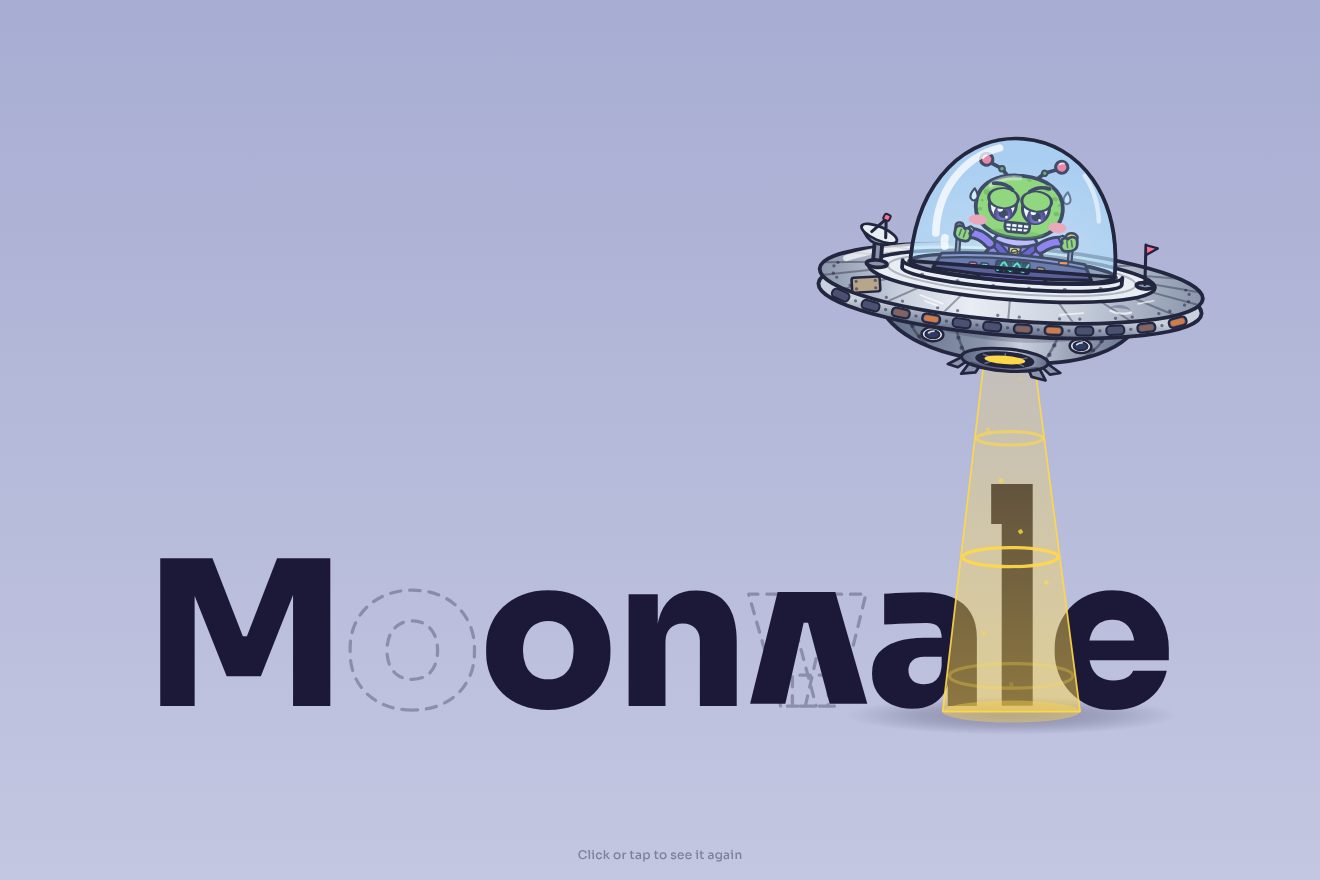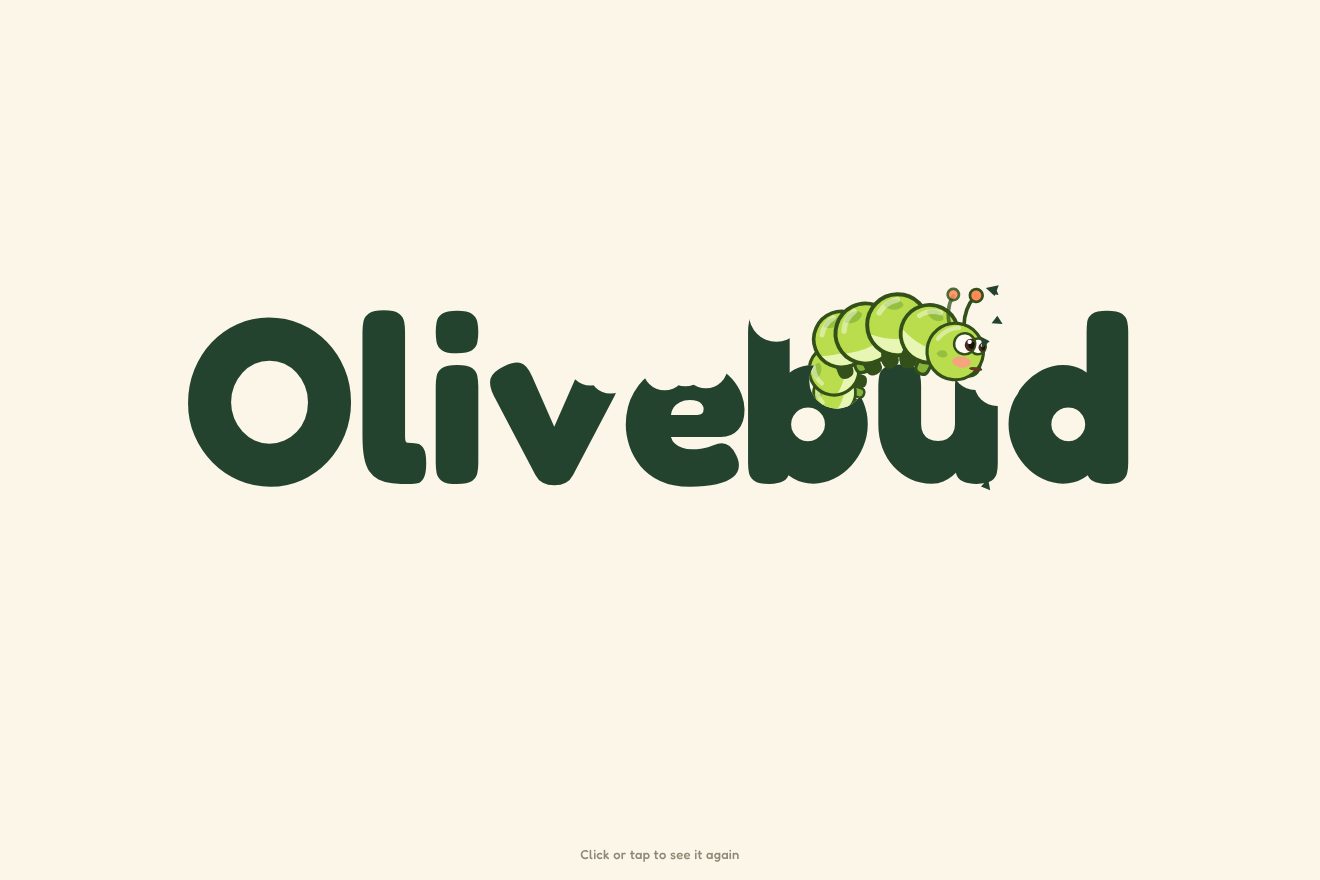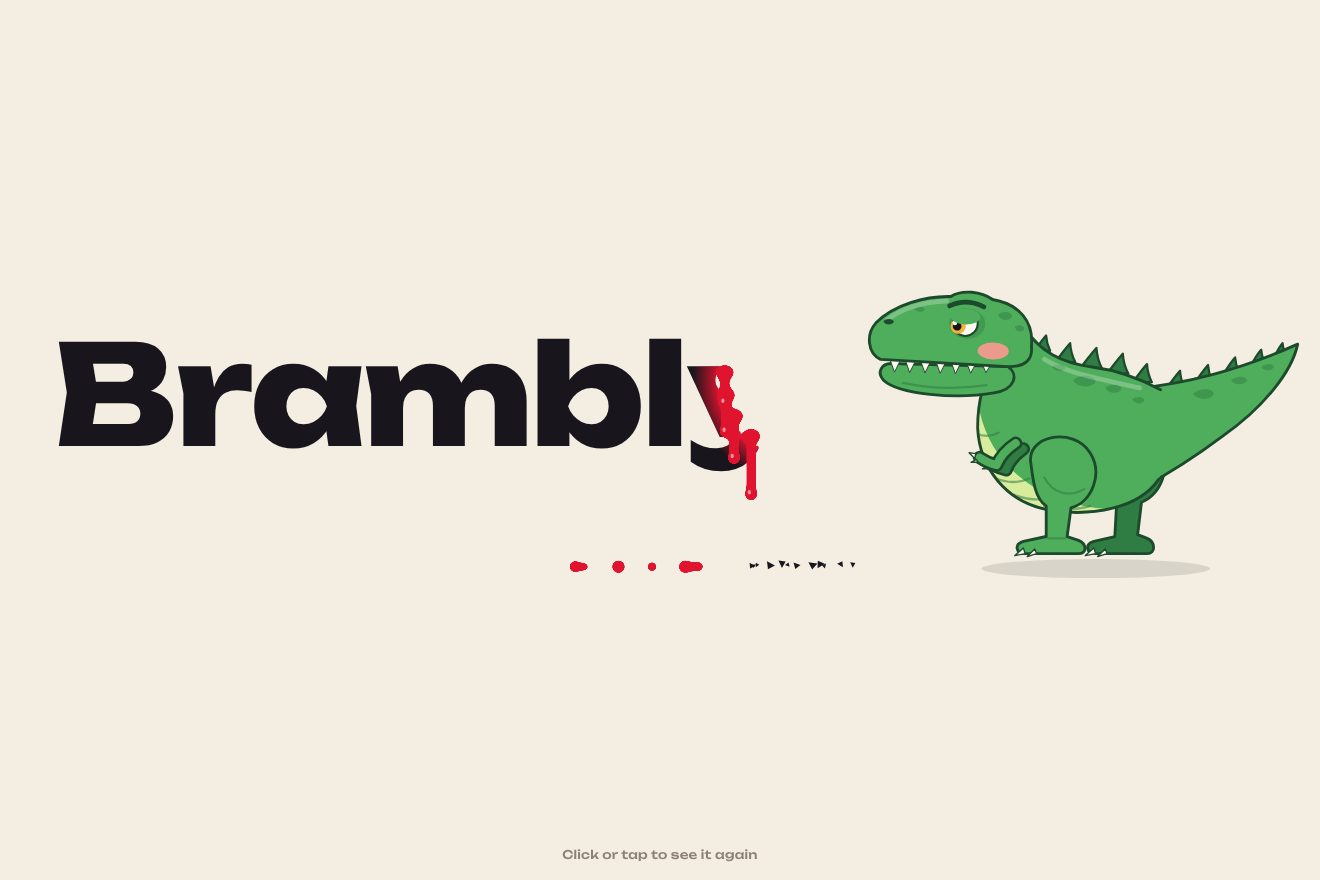
The dinosaur-bitten logo
Intro, SVG, Text
NewFree
A minimal logo intro: three thin lines spin like clock hands around three different pivots, each at its own speed, slow down and stop one after the other with an elastic tick, locked into the letter of the monogram; then the name arrives beside it letter by letter, each letter widening and taking weight, and the monogram fills. In the Playground you type your own name, choose the letter or upload your own logo.
A folder that runs on its own: index.html, style.css, script.js and the libraries from a CDN. The React and Vue tabs hold the same demo as a ready component, which switches its animations off when it leaves the page.
<!doctype html>
<html lang="en">
<head>
  <meta charset="utf-8">
  <meta name="viewport" content="width=device-width, initial-scale=1">
  <title>The clock-hand logo</title>
  <link rel="stylesheet" href="https://cdn.jsdelivr.net/npm/@fontsource-variable/archivo@5.3.0/wdth.css">
  <link rel="stylesheet" href="style.css">
</head>
<body>
  <main class="scena">
    <!-- the stage: the script measures it, spins three hands around three pivots and locks them into a monogram -->
    <svg class="palco" data-stage role="img" aria-label="navio" xmlns="http://www.w3.org/2000/svg">
      <defs>
        <clipPath id="mark-box"><rect data-box /></clipPath>
        <clipPath id="mark-inset"><rect data-box-in /></clipPath>
        <clipPath id="name-box"><rect data-name-box /></clipPath>
      </defs>
      <g data-mark>
        <!-- the thin circles each hand sweeps, and the cross on each pivot -->
        <g data-orbits></g>
        <g data-pivots></g>
        <!-- the three hands, then the same three strokes filled and cut square by the box -->
        <g data-hands></g>
        <g data-fill clip-path="url(#mark-box)"></g>
      </g>
      <!-- the name, one letter at a time, or the picture -->
      <g data-name></g>
    </svg>
    <p class="nota">Click or tap to see it again</p>
  </main>

  <script src="https://cdn.jsdelivr.net/npm/gsap@3.15.0/dist/gsap.min.js"></script>
  <script src="script.js"></script>
</body>
</html>Change values, colours and text with the controls and watch the animation respond live. Or write in the code yourself. Then download the folder with your changes.
15 values to change
With the Animorio connector, Claude Code takes it from here, guide included, and fits it into your project. Paste this request:
Take “The clock-hand logo” from Animorio and fit it into my siteEach monogram is a list of three strokes, written in cap heights: where each stroke runs from and to, and where its pivot sits (0 one end, 0.5 the middle). The N has its stems pivoting on one end, one at the bottom and one at the top, and the diagonal pivoting in the middle, like a propeller: three different centres. The letters that can be written with three straight strokes are A, F, H, I, K, N and Z; the others get a triangle. The last stroke is the second hand, the only one in colour.
Each hand is a horizontal line through the pivot, inside a group turned with rotate(angle, x, y). The angle starts from the final one minus one and a half, two or two and a half turns, depending on the hand, and arrives a few degrees past its place with power3.out, which starts fast and slows down like a spring running down; then an elastic.out(1, 0.32) brings it back: that is the tick. A single function, after every frame, writes the angle, length and shiver of every hand from a few numbers.
The grey circle is a path of several loops around the pivot, starting at the tip of the long arm and turning the same way (scale(1, -1) for the hands that turn the other way). stroke-dasharray shows only a window of it: the head stays on the tip until it has made a whole turn, then a full circle remains; at the tick the tail runs after the head and the circle winds back into the still tip.
When the last hand has stopped, the three lines are replaced by the same three strokes in another group, at the same size: the swap cannot be seen. Then they grow thicker; the ends that lie on the edge of the letter get longer and a clipPath as big as the letter plus half the thickness cuts them straight, so the N comes out solid and square, with sharp corners. The blue stroke lies under the black ones and has a clip one pixel smaller, so that no blue hairline shows along the shared edges.
The name is set in Archivo, a variable typeface with width and weight: each letter is a text centred on its place, measured on a canvas, and font-variation-settings brings it in at width 62 and weight 200 up to 100 and 600, with an elastic on the width. With a long name the whole logo is small: so while the hands spin the monogram is drawn bigger, with its lines thinned by the same amount, and it shrinks into place when the name arrives. The whole intro is one timeline, with the labels start, spin, locked, reveal, name, rest and leave. If IMAGE holds an address, the picture takes the place of the name and is uncovered by a widening clip; in the Playground there is a button to upload a file.
| Name | File | Default | What it changes |
|---|---|---|---|
NAME | script.js | 'navio' | The brand name, written beside the monogram. Its first letter is also the letter of the monogram, if MONOGRAM is empty. |
IMAGE | script.js | '' | The logo as a picture: the address of a file, or upload it from your computer. If there is one, it takes the place of the name beside the monogram. |
MONOGRAM | script.js | '' | The letter the three hands lock into: A, F, H, I, K, N or Z. Empty means the first letter of the name; any other letter becomes a triangle. |
TURNS | script.js | 1.5 | How many turns the first hand makes before it stops; the others make half a turn more each. |
SETTLE | script.js | 5 | How many degrees a hand runs past its place before it ticks back (0 = it stops dead). |
WEIGHT | script.js | 1 | How bold the monogram gets at the end (0 = it stays a drawing of thin lines). |
SPEED | script.js | 1 | The speed of the whole animation: 2 is twice as fast, 0.5 half as fast. |
REST | script.js | 4 | How many seconds the logo stays on show before the hands start again. |
LOOP | script.js | true | Whether the hands start again and the logo is put together anew. With false the logo stays, and now and then a wave of weight runs through the name. |
To present a brand that has a monogram: the opening of a watchmaker's site, an architecture or engineering studio, a design brand, a portfolio, a loading screen, a preview for a client, a social post. The hands and circles speak of precision and time; it suits pages where everything else is quiet. It works with a written name and with a picture.
The same animation with the sizes adapted: the logo is smaller and the circles of the hands stay inside the screen; with a long name the monogram spins big in the middle and shrinks when the name arrives. A tap restarts it.
Nothing turns and nothing moves: the monogram fades in already made of thin lines, then fades into the solid letter and the name appears beside it. If the animation starts again, the logo leaves with a fade too.
GSAP 3.15.0, Archivo (font variabile) 5.3.0.
Compressed with gzip, the three demo files weigh 9.1 KB; the libraries: GSAP 28 KB.
Tested on 14 October 2026
Use it in your own projects and in your clients’ projects. Do not resell it or redistribute it as is. GSAP stays under its own Standard license. Full license.
With your account’s email and password.
or with your email
You’re signed in as .
With your account, you can download the zip of every animation and every pack, for free.