Melting words
Text, Scroll, SVG
The note screen of a made-up AI voice notes app, in the clean style of today’s products: the voice wave breathes at the top, the sentence arrives word by word, grey and unsure, a few misheard words correct themselves with a swap, then every word settles into ink; at the end the note sums itself up into a title that builds letter by letter on the width axis.
A folder that runs on its own: index.html, style.css, script.js and the libraries from a CDN. The React and Vue tabs hold the same demo as a ready component, which switches its animations off when it leaves the page.
<!doctype html>
<!--
  "Live transcription" from Animorio · https://animorio.com
  License: free on your own sites and your clients’ sites, paid work included.
  Not for resale, redistribution, templates or code collections · https://animorio.com/en/license/
-->
<html lang="en">
<head>
  <meta charset="utf-8">
  <meta name="viewport" content="width=device-width, initial-scale=1">
  <title>Hushnote, live transcription</title>
  <link rel="stylesheet" href="https://cdn.jsdelivr.net/npm/@fontsource-variable/mona-sans@5.3.0/wdth.css">
  <link rel="stylesheet" href="style.css">
</head>
<body>
  <!-- the live transcription of a made-up voice notes app. The voice wave breathes at the top; below, the sentence
       arrives word by word, each word grey and unsure at first, a few heard wrong and swapped for the right one, then
       settling into ink once the voice has moved on. When the speaker stops, the note sums itself up into a title in
       variable type. Hover or tap a word to see when it was said; the round button stops early or plays it again. -->
  <main class="stage">
    <section class="nota" aria-label="Voice note">
      <header class="testa">
        <span class="marchio">
          <svg viewBox="0 0 20 20" aria-hidden="true"><rect x="1" y="1" width="18" height="18" rx="5.5" /><path d="M6.5 8.2v3.6M10 5.8v8.4M13.5 7.4v5.2" /></svg>
          <span data-app>Hushnote</span>
        </span>
        <span class="tempo" data-tempo aria-label="Recording time"></span>
      </header>

      <div class="titolo" data-titolo-box>
        <p class="titolo__vuoto" data-vuoto>Untitled note</p>
        <h1 class="titolo__pieno" data-titolo></h1>
      </div>

      <div class="onda" aria-hidden="true">
        <svg data-onda preserveAspectRatio="none"></svg>
      </div>

      <p class="testo" data-testo aria-live="polite"></p>

      <footer class="piede">
        <span class="stato">
          <span class="stato__voce" data-stato="ascolta">Listening</span>
          <span class="stato__voce stato__voce--luce" data-stato="riassume">Summarizing</span>
          <span class="stato__voce" data-stato="salvata">
            <svg viewBox="0 0 14 14" aria-hidden="true"><path data-spunta d="M2.5 7.4l2.9 2.8 6.1-6.4" pathLength="1" /></svg>
            Saved to Notes
          </span>
        </span>
        <button class="tasto" type="button" data-tasto aria-label="Stop recording">
          <svg class="tasto__ferma" viewBox="0 0 20 20" aria-hidden="true"><rect x="6" y="6" width="8" height="8" rx="2" /></svg>
          <svg class="tasto__ancora" viewBox="0 0 20 20" aria-hidden="true"><path d="M5.2 10a4.8 4.8 0 1 0 1.5-3.5" /><path d="M5.6 3.9v3h3" /></svg>
        </button>
      </footer>

      <span class="nuvola" data-nuvola role="tooltip"></span>
    </section>
  </main>

  <script src="https://cdn.jsdelivr.net/npm/gsap@3.15.0/dist/gsap.min.js"></script>
  <script src="script.js"></script>
</body>
</html>Change values, colours and text with the controls and watch the animation respond live. Or write in the code yourself. Then download the folder with your changes.
20 values to change
With the Animorio connector, Claude Code, ChatGPT, Cursor or VS Code take it from here, guide included, and fit it into your project. Paste this request:
Take “Live transcription” from Animorio and fit it into my siteEvery word gets the moment it is said: a fixed step plus a few hundredths per letter, and a pause after commas and full stops. Those times drive both the words coming in and the voice wave, so the bars rise right when a word arrives.
A word comes in grey and blurred at 30 per cent of the starting blur; after SETTLE seconds it turns black and sharp with a one-pixel step up and down. Everything sits on a single repeating GSAP timeline.
The words to correct have two stacked layers and a width written in em, measured on the real typeface: the wrong one lifts away, the right one arrives with back.out and the width goes from one to the other, so the line shifts on a spring and stays right when the window is resized.
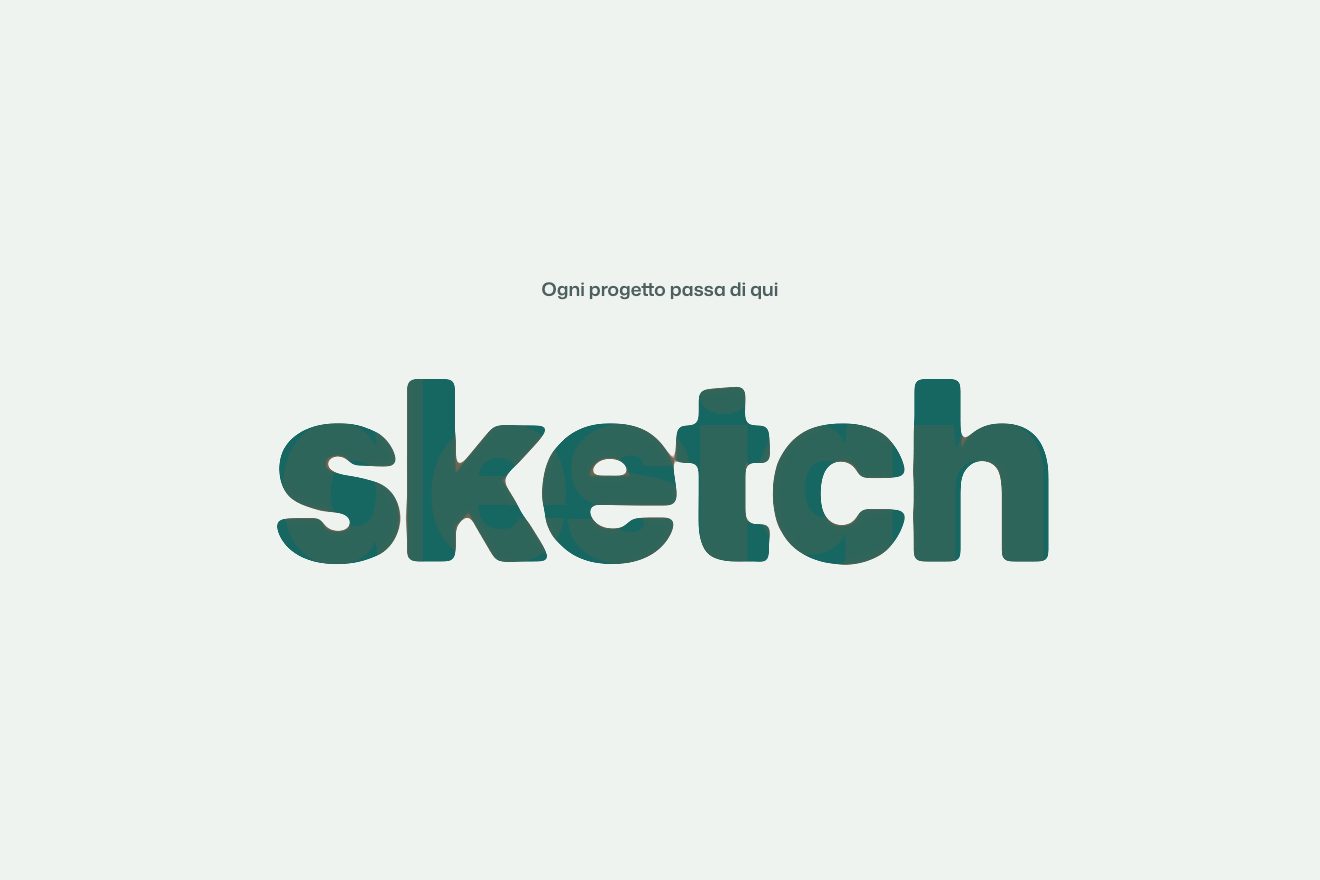
The title is split into letters and each goes from wdth 75 and weight 300 to wdth 100 and weight 650, 24 thousandths apart: Mona Sans is a variable font and the letter widens as it rises.
| Name | File | Default | What it changes |
|---|---|---|---|
APP | script.js | Hushnote | The name of the app. |
TITLE | script.js | Pricing live Thursday at noon | The title the note sums itself up into. |
SPEED | script.js | 1 | How fast the speaker talks. |
SETTLE | script.js | 1.1 | The seconds a word stays grey and unsure. |
BLUR | script.js | 4 | How blurred a word is when it appears. |
FIXES | script.js | 1 | 1 mishears a few words and fixes them, 0 hears everything right. |
WAVE | script.js | 1 | How tall the voice wave gets. |
HOLD | script.js | 3.6 | The seconds the finished note stays. |
For a voice notes, meetings or dictation app with AI, for the product page of a transcription tool or for the section of a landing page showing how live listening works.
The same animation with adapted sizes: the card is sized on the height too, the text and the title wrap more often, the tooltip opens on tap.
No blur, movement or swaps: the words fade in already right and black, the wave stays still, the title fades in.
GSAP 3.15.0, Mona Sans (font variabile) 5.3.0.
Compressed with gzip, the three demo files weigh 7.9 KB; the libraries: GSAP 28 KB.
Tested on 30 October 2026
Use it in your own projects and in your clients’ projects. Do not resell it or redistribute it as is. GSAP stays under its own Standard license. Full license.
Support Animorio
Animorio stays free thanks to the people who support it. If you like, buy us a coffee: it helps us make the next animations.
You asked for
We made it for you: it’s in the library, with the preview, the Playground and the code to copy.
An animation you can’t find, or a site to take apart in the journal: tell us which. We pick the next ones from here.
With your account’s email and password.
or with your email
You’re signed in as .
With your account, you can download the zip of every animation and every pack, for free.