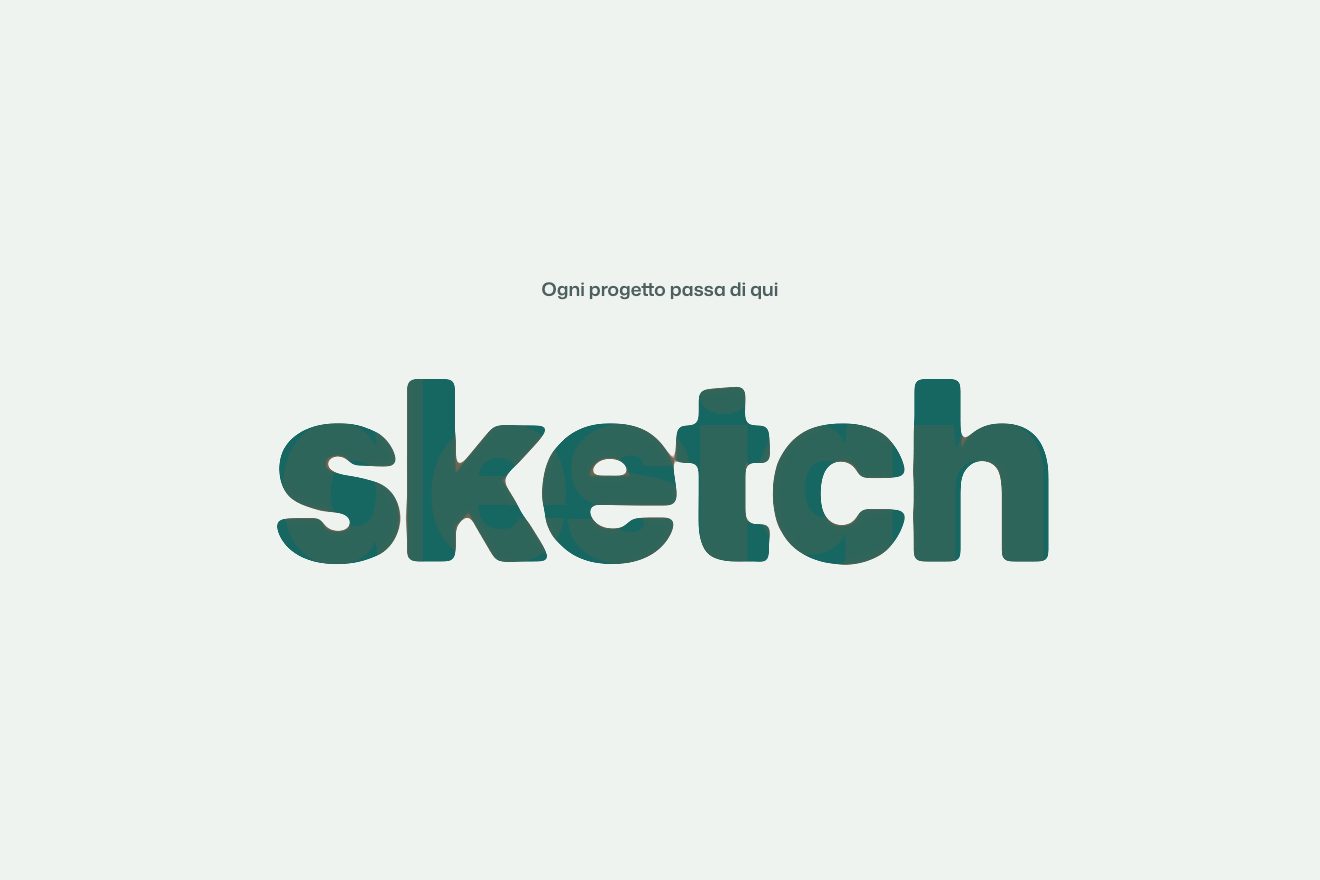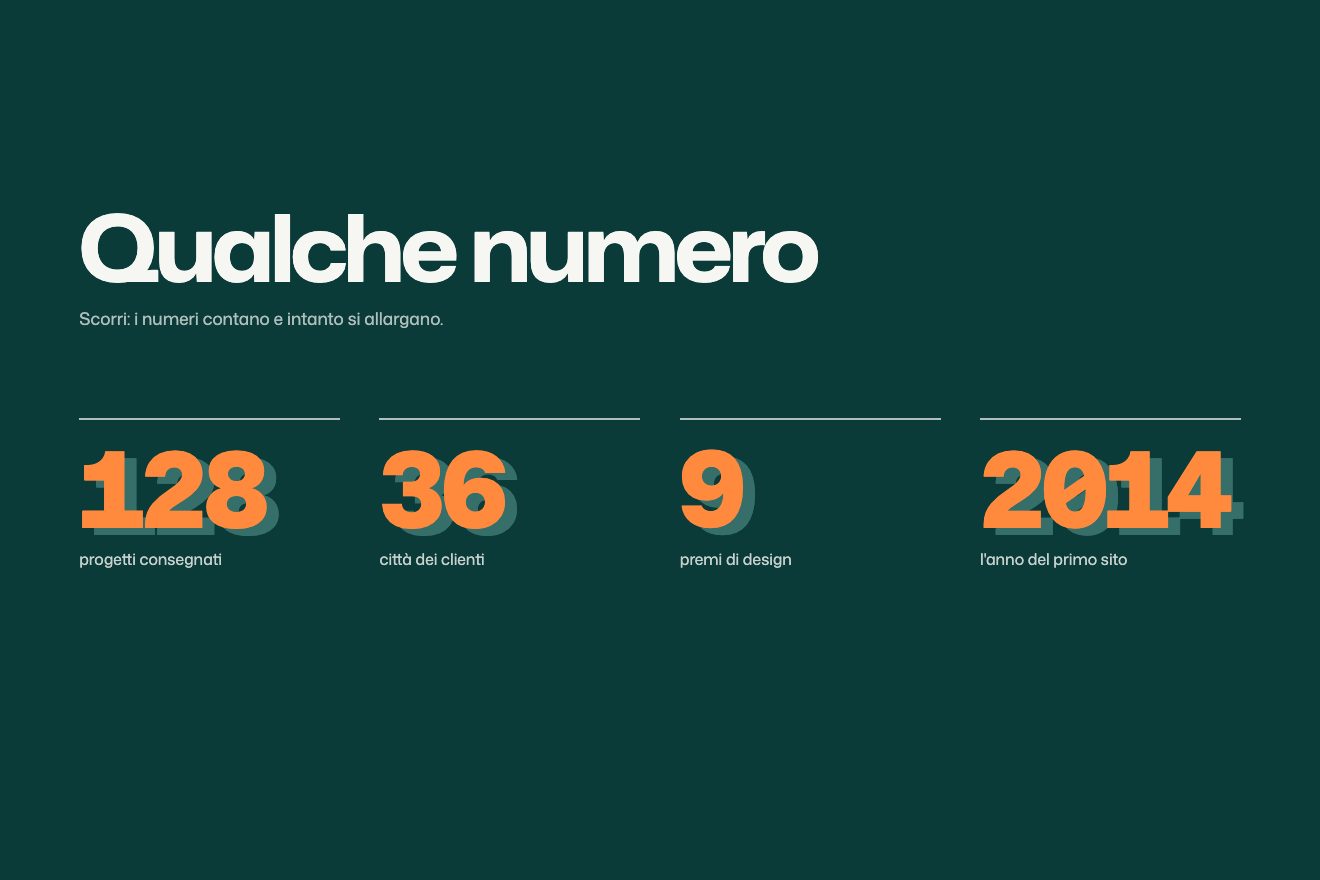
Long shadow letters
Text, Scroll, 3D
Scroll inside the preview
A scroll story for a brand’s transparent pricing section: a premium product card with a fabric swatch, layered shadows, an edge that catches the light and a fine grain, and under the price a segmented bar. Scrolling cuts the bar where each cost ends (materials, labour, duties, transport, our margin): the piece takes its colour among olive, sand and clay, lifts with its shadow and a glint runs across it, while its row lights up and the digits roll. At the end the bar shrinks next to the shop price, hatched and struck through.
A folder that runs on its own: index.html, style.css, script.js and the libraries from a CDN. The React and Vue tabs hold the same demo as a ready component, which switches its animations off when it leaves the page.
<!doctype html>
<!--
  "Price breakdown" from Animorio · https://animorio.com
  License: free on your own sites and your clients’ sites, paid work included.
  Not for resale, redistribution, templates or code collections · https://animorio.com/en/license/
-->
<html lang="en">
<head>
  <meta charset="utf-8">
  <meta name="viewport" content="width=device-width, initial-scale=1">
  <title>The price that breaks into its costs</title>
  <link rel="stylesheet" href="https://cdn.jsdelivr.net/npm/@fontsource-variable/mona-sans@5.3.0/wdth.css">
  <link rel="stylesheet" href="style.css">
</head>
<body>
  <!-- the transparent pricing card of a clothing brand's product page. The price sits over one segmented bar, the
       price drawn as a length. Scrolling cuts the bar where each cost ends: the cut opens on a spring, the piece fills
       with its colour, lifts, and a glint runs across it, while its row below lights up and its amount rolls in.
       At the end the bar shrinks to make room for what the same shirt costs in a shop, and that price is struck
       through. Hover a row or a piece of the bar to light it again; a soft light follows the pointer on the card -->
  <main class="pagina">
    <section class="corsa" data-corsa aria-label="Where the price goes">
      <div class="palco">
        <article class="card" data-card>
          <div class="card__luce" aria-hidden="true"></div>
          <header class="testa">
            <div class="campione" aria-hidden="true"><span class="campione__trama"></span></div>
            <div class="testa__testi">
              <p class="testa__nome">Field overshirt</p>
              <p class="testa__sotto">Organic cotton, olive</p>
            </div>
            <p class="chip" data-chip><span class="chip__a">Transparent pricing</span><span class="chip__b">Half of retail</span></p>
          </header>
          <p class="prezzo" data-prezzo><span class="prezzo__valuta">€</span><span data-totale>148</span></p>
          <div class="barra" data-barra aria-hidden="true">
            <div class="barra__binario" data-binario></div>
          </div>
          <ul class="righe" data-righe></ul>
        </article>
        <p class="scendi" data-scendi>Scroll</p>
      </div>
    </section>
  </main>

  <script src="https://cdn.jsdelivr.net/npm/gsap@3.15.0/dist/gsap.min.js"></script>
  <script src="https://cdn.jsdelivr.net/npm/gsap@3.15.0/dist/ScrollTrigger.min.js"></script>
  <script src="https://cdn.jsdelivr.net/npm/lenis@1.3.26/dist/lenis.min.js"></script>
  <script src="script.js"></script>
</body>
</html>Change values, colours and text with the controls and watch the animation respond live. Or write in the code yourself. Then download the folder with your changes.
27 values to change
With the Animorio connector, Claude Code, ChatGPT, Cursor or VS Code take it from here, guide included, and fit it into your project. Paste this request:
Take “Price breakdown” from Animorio and fit it into my siteEvery cost is a piece of the line as wide as its share of the price. The cuts are taken out of the pieces’ room, so the line keeps its length while it opens.
ScrollTrigger only gives the progress; the stage is the progress times the number of stages (the whole line, one cost per stage, the shop). Changing stage only changes the targets of the springs.
The cut, the accent, the line shrinking, the shop and the strike each have their own spring, integrated in steps of 1/120 of a second in the GSAP ticker: that is where the pixel past comes from.
Every digit is a column from 0 to 9 behind a one-line window: the column rises by digit times the value of the cut’s spring, the tens a little behind the units. The glint is a soft-light gradient moved by a GSAP tween at every cut.
At the last stage the line narrows to the ratio between our price and the shop’s; the dashes run from its end to the edge, and the strike starts when the shop has nearly arrived.
| Name | File | Default | What it changes |
|---|---|---|---|
RETAIL | script.js | 295 | What the same shirt costs in a shop: the hatched stretch at the end. |
GAP | script.js | 4 | How wide each cut opens, in pixels. |
LIFT | script.js | 3 | How far the piece being explained lifts, in pixels. |
SHEEN | script.js | 1 | How bright the glint that runs across a piece when it is cut (0 = none). |
STIFFNESS | script.js | 260 | The springs of the cuts and the pieces: higher is quicker. |
BOUNCE | script.js | 0.32 | How far the springs go past before they settle (0 = not at all). |
SMOOTH | script.js | 1.1 | Seconds of the smooth scroll; 0 for the browser’s own. |
For the transparent pricing section of a clothing brand or a product sold direct, to tell where the money of a purchase goes; also for a service page that wants to show what is inside a subscription.
The same animation with adapted sizes: the card, the price and the rows are sized on the height too and fit the phone box up to the last step; the light that follows the pointer and the hovers only exist where there is a pointer.
No movement: the card appears in a fade with the bar already cut in five colours and shrunk next to the shop, the whole list, “Half of retail” and the shop price struck through.
GSAP 3.15.0, ScrollTrigger 3.15.0, Lenis 1.3.26, Mona Sans (font variabile) 5.3.0.
Compressed with gzip, the three demo files weigh 8.6 KB; the libraries: GSAP + ScrollTrigger 45 KB, Lenis 5.3 KB.
Tested on 1 November 2026
Use it in your own projects and in your clients’ projects. Do not resell it or redistribute it as is. GSAP stays under its own Standard license. Full license.
Support Animorio
Animorio stays free thanks to the people who support it. If you like, buy us a coffee: it helps us make the next animations.
You asked for
We made it for you: it’s in the library, with the preview, the Playground and the code to copy.
An animation you can’t find, or a site to take apart in the journal: tell us which. We pick the next ones from here.
With your account’s email and password.
or with your email
You’re signed in as .
With your account, you can download the zip of every animation and every pack, for free.