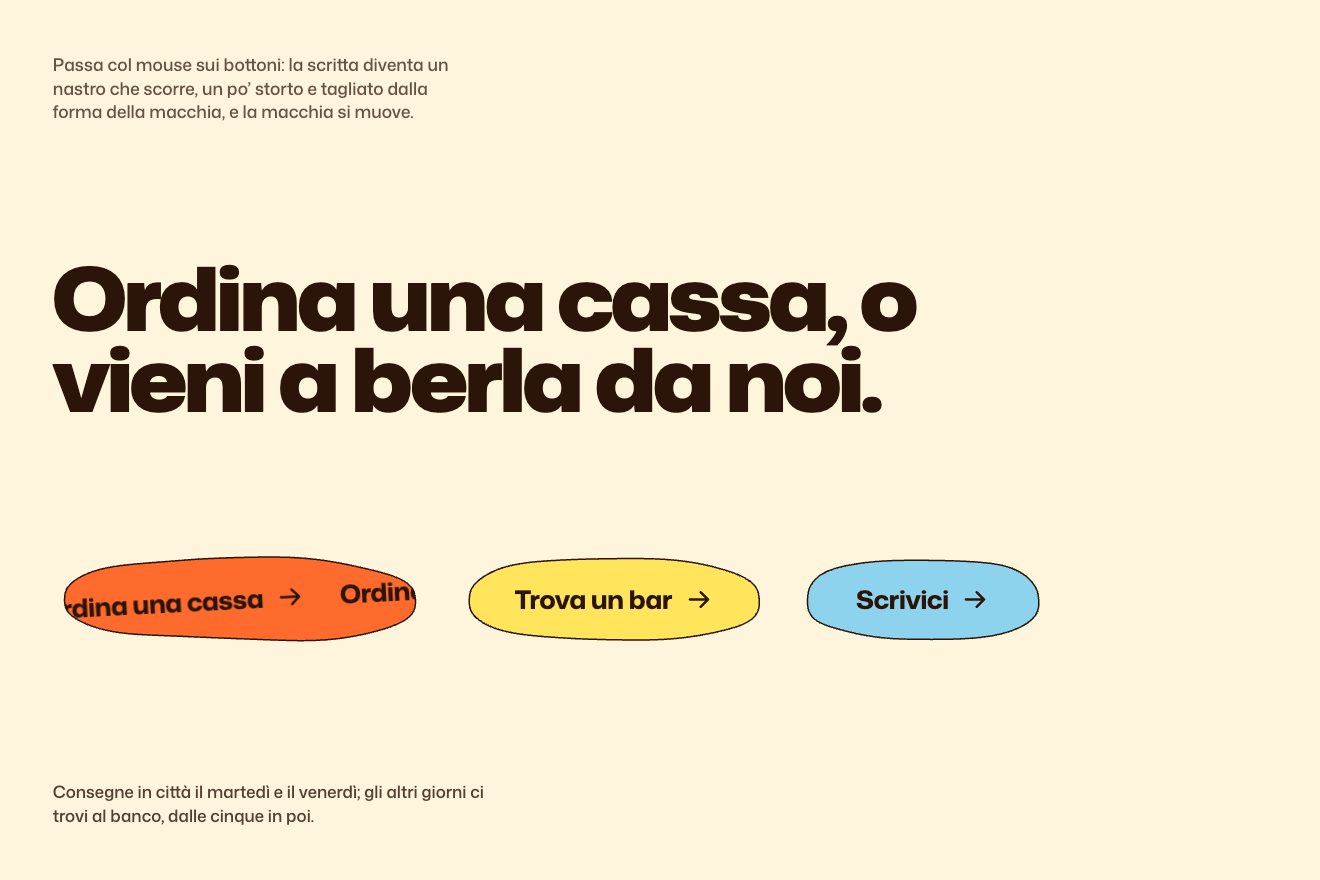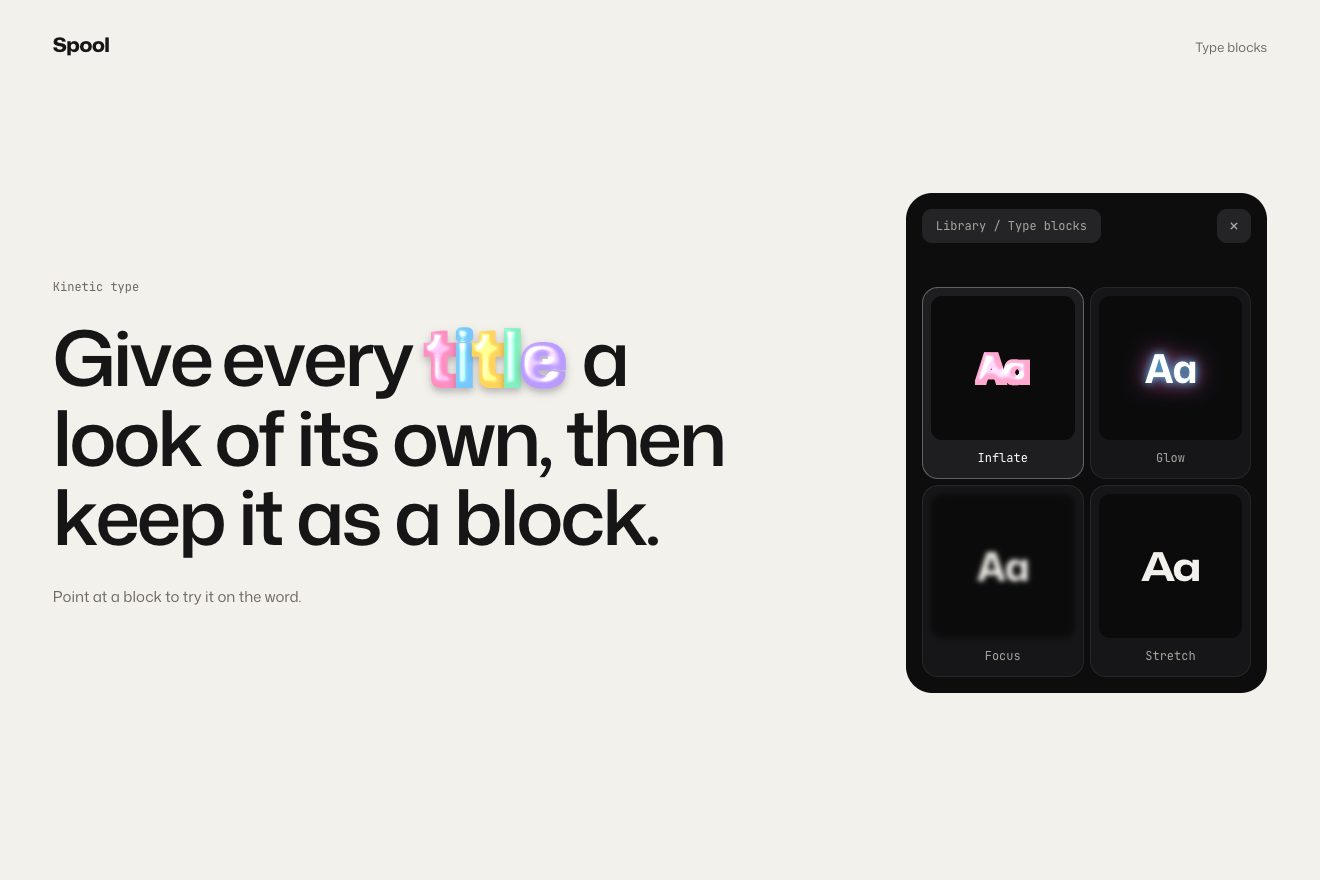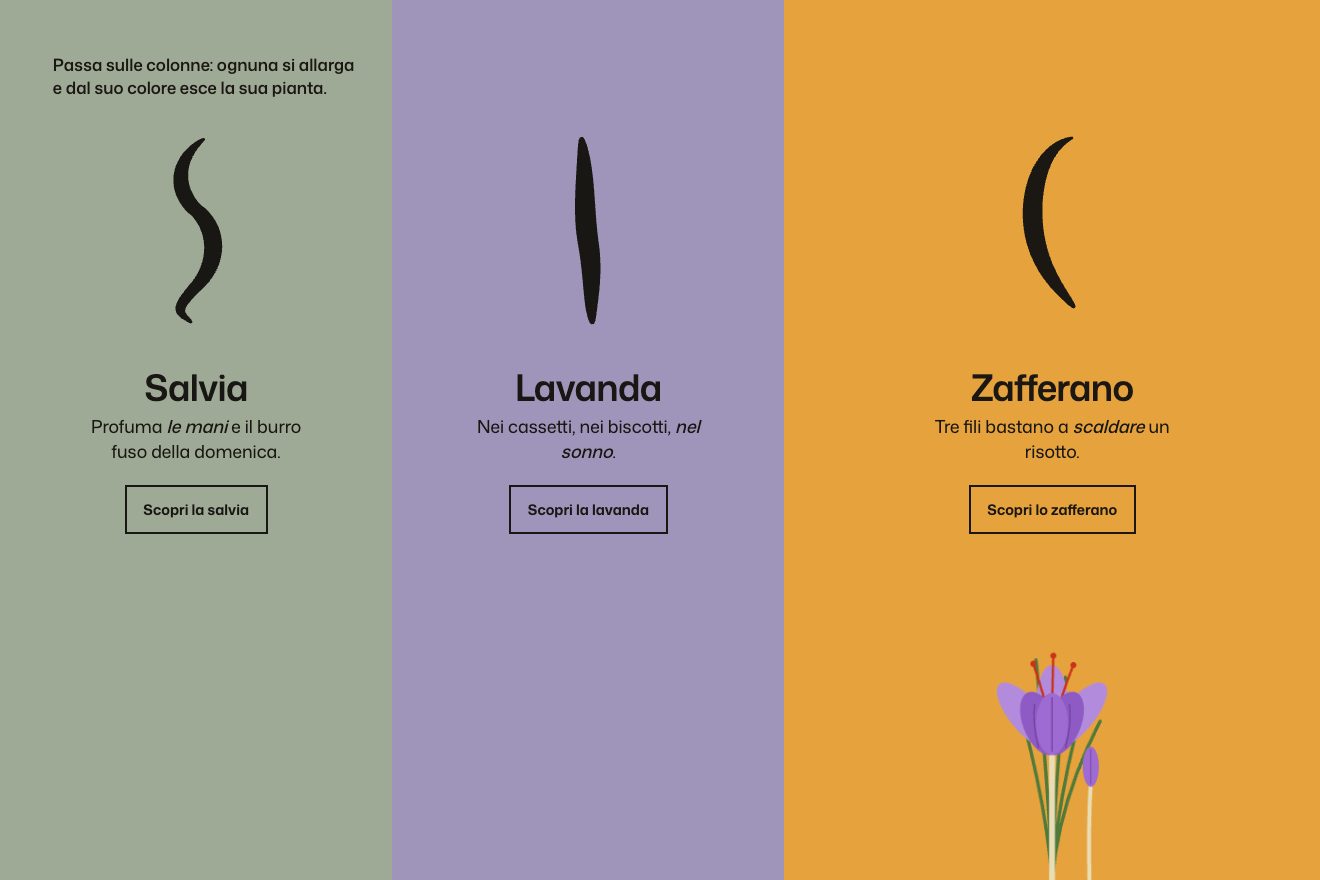
The colour columns
Hover, SVG
A guitar tuner: six strings to touch and a fan-shaped dial. The touched string rings, the needle swings to how far off it is and settles on the note as the string comes up to pitch; in tune, the letter gains weight and colour and the string gets its tick.
A folder that runs on its own: index.html, style.css, script.js and the libraries from a CDN. The React and Vue tabs hold the same demo as a ready component, which switches its animations off when it leaves the page.
<!doctype html>
<!--
  "Guitar tuner" from Animorio · https://animorio.com
  License: free on your own sites and your clients’ sites, paid work included.
  Not for resale, redistribution, templates or code collections · https://animorio.com/en/license/
-->
<html lang="en">
<head>
  <meta charset="utf-8">
  <meta name="viewport" content="width=device-width, initial-scale=1">
  <title>Guitar tuner</title>
  <link rel="stylesheet" href="https://cdn.jsdelivr.net/npm/@fontsource-variable/mona-sans@5.3.0/wdth.css">
  <link rel="stylesheet" href="style.css">
</head>
<body>
  <main class="stage">
    <!-- a guitar tuner: touch a string, it rings, the needle swings to how far off it is and settles on the note
         as the string comes up to pitch; the letter gains weight when it is in tune -->
    <section class="tn" data-tn aria-label="Guitar tuner">
      <header class="tn__head">
        <span class="tn__brand">Tuner</span>
        <span class="tn__ref">Standard, A <b data-a4>440</b> Hz</span>
      </header>

      <div class="tn__gauge">
        <svg viewBox="0 0 300 150" aria-hidden="true">
          <path class="tn__zone" data-zone d=""></path>
          <g data-ticks></g>
          <text class="tn__end" x="42" y="112">flat</text>
          <text class="tn__end tn__end--r" x="258" y="112">sharp</text>
          <circle class="tn__ping" data-ping cx="150" cy="120" r="10"></circle>
          <g data-needle>
            <path class="tn__needle-shadow" d="M150 27 152.300 88h-4.600Z"></path>
            <path class="tn__needle" d="M150 27 152.300 88h-4.600Z"></path>
          </g>
        </svg>
        <p class="tn__note" aria-hidden="true"><span class="tn__letter"><span data-letter>E</span></span><sub data-octave>2</sub></p>
      </div>

      <p class="tn__read" aria-live="polite">
        <span class="tn__hz"><b data-hz>82.41</b> Hz</span>
        <span class="tn__say"><span data-say>Touch a string</span></span>
        <span class="tn__cents"><b data-cents>0</b> cents</span>
      </p>

      <div class="tn__strings" data-strings role="group" aria-label="Strings"></div>
    </section>

    <svg class="ghost" data-ghost viewBox="0 0 24 24" aria-hidden="true"><path d="M5 3.2 19.2 11l-6.3 1.6-3.3 5.9Z"></path></svg>
  </main>

  <script src="https://cdn.jsdelivr.net/npm/gsap@3.15.0/dist/gsap.min.js"></script>
  <script src="script.js"></script>
</body>
</html>Change values, colours and text with the controls and watch the animation respond live. Or write in the code yourself. Then download the folder with your changes.
26 values to change
With the Animorio connector, Claude Code, ChatGPT, Cursor or VS Code take it from here, guide included, and fit it into your project. Paste this request:
Take “Guitar tuner” from Animorio and fit it into my siteEach string is a path of twenty points: the fundamental plus a little second harmonic, with an amplitude that falls exponentially over DECAY seconds. A wider, fainter copy a beat behind makes the trail.
The dial reads a single number: the needle turns through the transform attribute, the ticks within nine cents grow longer, the hertz come from A4 and the note’s MIDI number. The tremble comes from the string’s amplitude.
The string reaches zero in two goes (70% and then the rest); then the letter’s wght and wdth axes rise with back.out, a circle widens around the letter and the tick is drawn with stroke-dashoffset.
| Name | File | Default | What it changes |
|---|---|---|---|
ACCENT | script.js | #ff5a36 | The colour of the note when it is in tune. |
A4 | script.js | 440 | The reference A, in hertz: every frequency is worked out from it. |
DETUNE | script.js | 28 | How many cents out the worst string is at the start. |
TUNE | script.js | 1.1 | How many seconds a string takes to reach the note. |
DECAY | script.js | 2.2 | How many seconds the string keeps ringing after the touch. |
LOOP | script.js | true | Left alone, a pointer tunes the six strings one after the other. |
In a tuner app, a guitar course or an instrument shop, and as a widget in a music app. The same dial works for any reading that must come to zero: a level, a balance, a calibration.
The same piece: strings are tuned by tapping instead of hovering, the dial never exceeds 36% of the window’s height and the string rows tighten with the height.
No vibration, swinging needle or rolling letter: touching a string, the dial is already at zero and the string is ticked.
GSAP 3.15.0, Mona Sans (font variabile) 5.3.0.
Compressed with gzip, the three demo files weigh 7.2 KB; the libraries: GSAP 28 KB.
Tested on 17 November 2026
Use it in your own projects and in your clients’ projects. Do not resell it or redistribute it as is. GSAP stays under its own Standard license. Full license.
Support Animorio
Animorio stays free thanks to the people who support it. If you like, buy us a coffee: it helps us make the next animations.
You asked for
We made it for you: it’s in the library, with the preview, the Playground and the code to copy.
An animation you can’t find, or a site to take apart in the journal: tell us which. We pick the next ones from here.
With your account’s email and password.
or with your email
You’re signed in as .
With your account, you can download the zip of every animation and every pack, for free.